Queens of the Dead 2025 Movie Review
The 2025 film Queens of the Dead, written and directed by Tina Romero, is a bold, colorful, and often uneven fusion of horror, comedy, and queer celebration. Set during a warehouse drag show in Brooklyn that becomes the epicenter of a zombie outbreak, the film assembles a cast of drag queens, club kids, and frenemies who must band together, use their creative resourcefulness, and reconcile personal conflicts in order to survive. Romero, daughter of the legendary George A. Romero, makes it clear early on that she’s building on her father’s legacy—but not mimicking it.
From a narrative perspective, Queens of the Dead leans first into character work rather than pure spectacle. Several early sequences linger in the backstage drama of drag events, interpersonal tensions, and frustrated ambitions, as the film allows its ensemble to breathe and show depth beyond mere archetypes. That pacing choice is a double-edged sword: it gives weight to the characters’ motivations and relationships, but also slows momentum before the horror fully kicks in. Once the undead invade, Romero switches gears into campy horror‑comedy mode. The zombies are stylized, rather than overly gory, reflective of Romero’s ambition to create a “delicious candy‑colored world” over shock value.The film’s climactic stretch—the mash‑up of drag performance, spectacle, and zombie combat—feels like a release of tension, where all the disparate tones converge.
One of the film’s greatest strengths is its willingness to center queer identity not as a punchline but as a source of dignity, power, and conflict. The drag performers are not relegated to stereotypical or marginal roles: their costumes, performance instincts, and community bonds become literal weapons in a fight for survival. The reversed trope of a “token straight character” is a clever subversion, and the film doesn’t shy away from embedding moments of grief, cynicism, and relational strain amidst the camp. Thematically, it flirts with commentary on community as chosen family, intergenerational queer tensions, the performative nature of identity, and the contradictions of visibility in a world that both fetishizes and threatens queer bodies.Yet the film is less interested in rigorous sociopolitical critique than it is in crafting a heartfelt genre romp where marginalized voices are the leads. Critics have noted that some of the deeper ideas are only sketched, not fully elaborated.
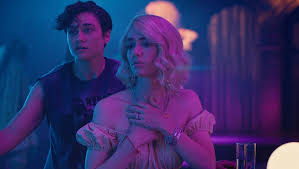
Performances are a highlight across the board. The ensemble takes risks, and even in smaller supporting roles, the actors make their presence felt. Costume design, especially in the third act, gets special praise: the DIY mash‑ups of glam and apocalypse create a striking visual aesthetic. Cinematography by Shannon Madden allows the saturated color palette and drag visuals to shine without losing the sense of urgency in darker moments.The sound design and score, by Blitz//Berlin, lean into synth textures, giving the film a retro‑futuristic pulse and making its homage to zombie culture audible. In festival screenings, the film has drawn laughs—its one‑liners, especially, tend to land—and moments of real emotional resonance.
However, Queens of the Dead is not without its flaws. The pacing is inconsistent: the early act’s slower beats sometimes struggle to maintain momentum, and transitions between comedic and horror modes occasionally feel jolting. Some jokes land better than others, and the tonal juggling act can leave the film feeling uneven—too frivolous in some scenes, too earnest in others.The horror elements—while stylish—rarely terrify; fans of more visceral, bleak zombie cinema might find the stakes diminished.Certain subplots (social media addiction, religion, health crises) are introduced but not always fully woven into the narrative arc, making them feel more like flavor than foundation. In moments, the film’s commitment to camp threatens to undercut emotional tension, particularly when characters perish.
Yet even at its wobbliest, Queens of the Dead often carries you along on sheer energy and charisma. The film finds its stride when it leans into spectacle and embraces the joyful, defiant core of drag performance. The final act’s synthesis of humor, horror, and queer pride offers a cathartic payoff—an eruption of creativity that feels earned.Even critics who point out structural weaknesses often praise the film’s audacity, its casting, and the promise of what Romero might do next. On the review aggregator Metacritic, the film was given a score of 70 based on early critic reviews, reflecting generally favorable reception, and on Rotten Tomatoes it holds a strong “Tomatometer” rating in the 90s based on a relatively limited sample at publication time.
In sum, Queens of the Dead is a scrappy, audacious, and ultimately charming addition to the zombie genre. Its heart lies in its representation—giving queer performers agency, visibility, and narrative stakes in a genre that rarely affords them such center stage. Its flaws—uneven pacing, tonal imbalance, underdeveloped thematic threads—are the costs of ambition and the challenges of balancing so many modes. But the film’s successes—its inventive set pieces, emotional resonance, visual bravura, and unabashed queerness—make it a memorable debut for Tina Romero and a strong candidate for cult fandom. It may not always transcend its own exuberance, but it often sparkles when it dares to lean fully into its identity, its camp, and its courage.