Pillion 2026 Movie Review
Harry Lighton’s Pillion, adapted from Adam Mars-Jones’ novel Box Hill, is not your typical queer love story. It’s messy, erotic, and sometimes uncomfortable – but that’s exactly what makes it so compelling.
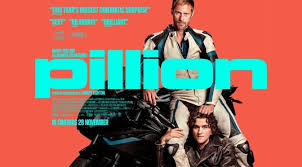
The film follows Colin (Harry Melling), a socially awkward parking attendant whose life takes a sharp turn when he meets Ray (Alexander Skarsgård), a confident, enigmatic biker. Their relationship quickly develops into a Dom/Sub dynamic, with Colin stepping into the submissive role. What could have easily been played for shock value instead becomes a complex portrait of power, vulnerability, and desire.
Melling is excellent, embodying Colin’s quiet neediness and his awkward search for identity with a mix of humor and heartbreak. Skarsgård, meanwhile, brings a fascinating ambiguity to Ray. He’s commanding and often intimidating, yet there are fleeting moments of softness that suggest a man not entirely at ease with his own dominance. Watching the two interact feels raw and unpredictable, almost like eavesdropping on something private.
Lighton’s direction balances intensity with sensitivity. The sex scenes are explicit but not gratuitous – they feel integral to the story, expressions of intimacy rather than spectacle. At times the film risks overwhelming its audience; certain sequences are deliberately discomforting, pushing boundaries in ways that won’t be for everyone. But there’s also humor, tenderness, and a sharp eye for the absurdity of human relationships, which keeps it from becoming too heavy.
If there’s a weakness, it’s in the pacing. The middle portion is the most engaging, while the resolution feels a bit predictable. Still, Pillion lingers long after it ends. It’s a film about longing, shame, and the strange forms love can take when we surrender control.