Orwell: 2 + 2 = 5 2025 Movie Review
Raoul Peck’s Orwell: 2 + 2 = 5 is a bold, ambitious documentary that attempts to bridge the life, ideas, and warnings of George Orwell with the urgent cultural and political tensions of our contemporary world. Over its roughly two‑hour span, the film oscillates between biography and political critique, weaving in archival footage, Orwell’s own texts, cinematic adaptations of his novels, and startling modern imagery to make the uncomfortable claim that many of Orwell’s nightmares are no longer speculative. The result is both exhilarating and uneven, a work that soars when its connections hit hard, and falters when its structure buckles under the weight of its own urgency.
Peck, who is no stranger to melding historical figure studies with sociopolitical commentary (as in I Am Not Your Negro), undertakes with this film the task of rendering Orwell not merely a literary icon, but a prophetic voice whose warnings are alive and bleeding at the edges of our daily life.Narrated by Damian Lewis, who lends Orwell’s voice a gravitas and resonance, the documentary begins in medias res—introducing us to Orwell’s final years, his frailties, and the intellectual gravity behind his final masterpiece 1984. From there Peck spirals back and forth in time, dramatizing Orwell’s experiences in colonial Burma, his disillusionments with empire and class, and the escalating convictions that would drive him toward his dystopian imagination.
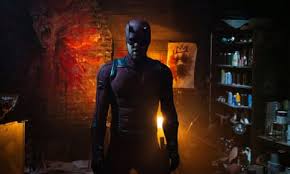
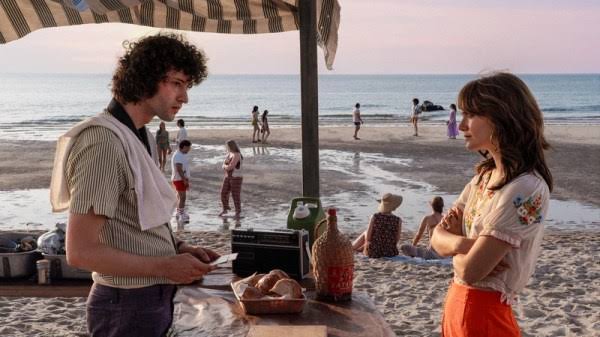
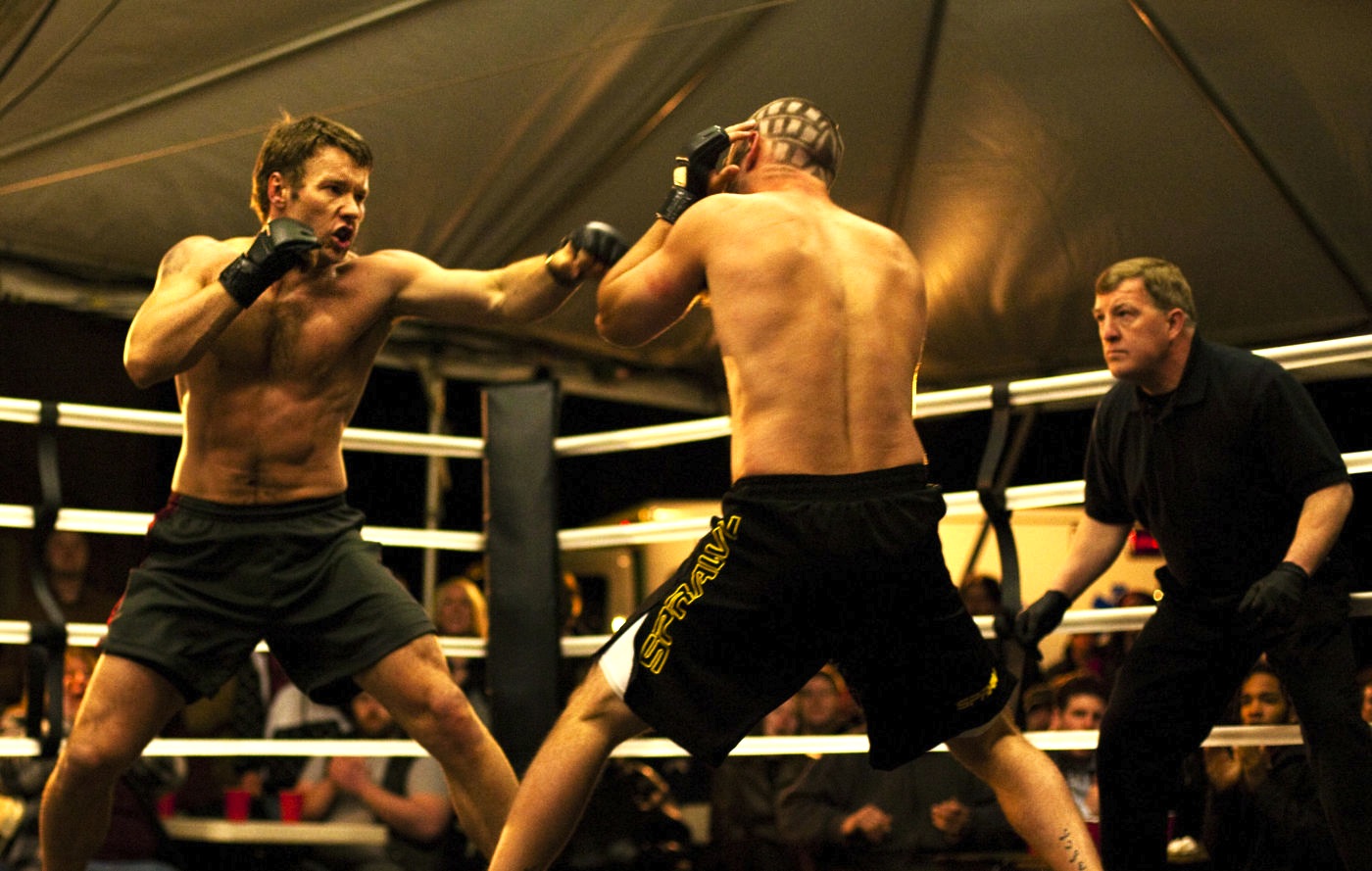
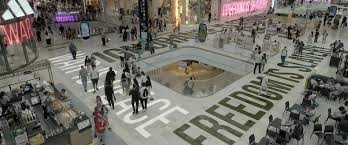
One of the greatest strengths of Orwell: 2 + 2 = 5 is how Peck juxtaposes Orwell’s theoretical arguments with visual evidence of today’s creeping authoritarian impulses. Scenes of modern protests, whistleblower surveillance, disinformation campaigns, AI deepfakes, border crackdowns, and mass media manipulation are intercut with Orwell’s own words—sometimes read in voiceover, sometimes shown on screen. Peck leans heavily on the rhetorical tension that Orwell loved: the idea that language, statistics, and the apparatus of bureaucracy can be twisted so as to deny objective reality. Hence the provocative title: 2 + 2 = 5. The film asks us to consider how often we, as societies, concede that ridiculous falsehoods are truths when the machinery of power says so.In these moments, the film’s urgency is palpable. You feel alerted, uneasy, perhaps a bit disoriented—just as Orwell intended his readers to be.
Yet, for all its visual ambition, the film is not without structural friction. Critics have pointed out that the narrative often feels overstuffed, sometimes repetitious, and occasionally diffuse.The transitions between “Orwell’s life” and “the current moment” often feel abrupt, as if Peck is compressing a lifetime of ideas into a vessel that doesn’t quite hold them neatly. The film returns again and again to its core warnings—about surveillance, discourse control, the malleability of “truth”—but sometimes at the expense of deeper character insight or cohesive pacing. Roger Ebert’s review describes it as “provocative but sometimes convoluted,” and that feels apt.There are sections where Peck leans on stylistic devices—suffocating sound design (heavy breathing, for instance), AI-generated visuals, montage flourishes—that in some sequences feel overlit or emotionally heavy-handed. These choices occasionally risk tugging us out of the documentary’s intellectual core and into cinematic spectacle.
In terms of its portrayal of Orwell himself, Peck gives us the skeleton of the man—the key events, the turning points, the anxieties—but the flesh often remains suggested rather than fully formed. Biographical details such as Orwell’s marriages, his inner struggles, or his personal contradictions are touched on only lightly. For instance, the documentary notes his commitment to socialism, his ambivalent relationship with his class origins, and his early colonial experiences, but some critics feel that the film sidesteps a more honest reckoning with Orwell’s imperfections—his occasional elitism, or the tensions between his intellectual posture and his human vulnerabilities. The result is a version of Orwell that is more symbol than man: urgent, morally weighty, prophetic, but perhaps less intimate than one might hope.
Still, such limitations do not completely derail the film’s rhetorical force. Peck is laser-focused on the questions he wants to ask: How do power and language collude to erase dissent? In what ways do technological mediation and algorithmic persuasion echo Orwell’s nightmare of biased history and manipulated memory? To what degree are we complicit when we stop demanding clarity? The film does not shy away from highlighting contemporary injustices—ethnic cleansing, refugee crises, suppression of press freedom, political censorship—and positions them as logical descendants of the forces Orwell warned about.Peck’s montage sequences, often augmented by modern footage and archival reels, keep pushing the viewer to see Orwell not as someone sealed off in the past, but as someone whose ideas may still be our compass—or our alarm.
The documentary also succeeds in its tonal ambition: it is not an academic lecture but a kind of moral call. Peck clearly wants his audience to feel unsettled, to leave the theater unsettled. As many critics have noted, the strength of the film is not in the novelty of its ideas (most of us have heard warnings about misinformation or authoritarian creep), but in the clarity with which it insists on connecting those ideas to present dangers.In doing so, Peck invites that rare thing in political documentaries: a kind of urgency—not just to reflect, but to act.
Audience reception and reviews have generally been favorable, though not uncritical. On Rotten Tomatoes the film holds a strong Tomatometer rating, and Metacritic registers “generally favorable” reviews.Some praise the film’s daring, its ambition, and Lewis’s narration; others call out its occasional overreach or structural turbulence. For some viewers, the biggest danger is that the film’s sincere warnings might be diluted by its vibrancy and breadth. The very force that makes it compelling—its urgency—can also make it feel overly earnest or manipulative at times.
Perhaps the most telling critique is that Orwell: 2 + 2 = 5 doesn’t always trust its audience to sit in uncertainty. There are moments when the documentary asserts its conclusions too loudly, not giving the viewer enough space to linger in the paradoxes. But that impulse is also what gives the film its wings: it doesn’t want to be neutral in the face of authoritarian creep. Peck might overstep, but he does so in the name of conscience.
Ultimately, Orwell: 2 + 2 = 5 stands as an important work—imperfect, provocative, and necessary. It is not the last word on Orwell, nor is it a definitive biography, but it is a living intervention: a film that insists Orwell is not dead. It invites viewers to see the red threads he pulled—empires, censorship, inequality, manipulation—and to ask: Are we living them now? And if so, what will we do about it? In a media culture that often numbs dissent with spectacle, Peck’s film is a bracing reminder that the stories we accept shape the world we live in. It does not offer solutions, but it does demand accountability—and in 2025, that may be radical enough.