The Dreadful 2026 Movie Review
How strong are the ties that bind us together? Whether marriage, friendship, or biological connection, what draws us to the people who share our homes and what keeps us from simply walking away? Natasha Kermani explores these evergreen considerations in The Dreadful, a gorgeous horror film examining power and manipulation.
Inspired by Kaneto Shindô’s 1964 masterpiece Onibaba, her gothic version of the Shinto-Buddhist folk legend follows two women connected by a single man whose death puts their devotion to the test. Can morality survive in a world dominated by capitalist greed, and how far will we go to protect ourselves? The Dreadful exposes the corrosive nature of the stories we tell to justify our desires.
Anne (Sophie Turner) lives a mostly peaceful life in a quiet cove in medieval England. She shares her meager home with her mother-in-law, Morwen (Marcia Gay Harden), as they patiently wait for her husband Seamus (Laurence O’Fuarain) to return from war. Comparatively poor, the women survive on the products of their small garden and what they can scavenge or steal from larger estates. When Jago (Kit Harington), Seamus’ childhood friend, returns to the cove with awful news, Anne and Morwen must reevaluate their lives now that they cannot expect their man to return. Morwen begins acting with increased violence as she desperately tries to hold her family together and prevent the younger woman from leaving her side.
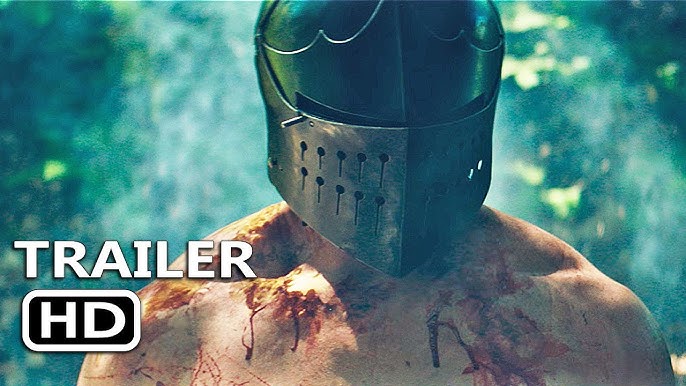
Meanwhile, a dark figure lurks on the outskirts of their simple homestead. His face obscured by a heavy, black helmet, a mysterious knight on horseback seems poised to punish the women for their sins. Or perhaps this figure is a symbol of the destructive greed that claimed Seamus’ life.
Kermani remixes this classic legend in a feminist view of violence and war. Anne and Morwen have built a pleasant life together until Jago’s intrusion throws them into chaos. His presence may provide the illusion of patriarchal stabilization, but he plants seeds of distrust in their otherwise happy home. As the ultra-masculine knight haunts Anne’s dreams, the young widow begins questioning the security she’s built for herself. With her immortal soul hanging in the balance, perhaps she does need a man’s protection after all. But where does that leave Morwen, whose increasingly violent choices have made her a liability? And can Jago’s intentions be trusted, or is he simply angling for a different kind of conquest?
Drawing from extensive research into Europe’s tumultuous Dark Ages and the region’s destructive feudal system, Kermani’s impressive script blends ancient Japanese folklore with Arthurian legend. Shot in Tintagel on the coast of Cornwall, England, where the legendary King was said to have lived, the landscape has an ethereal quality that perfectly blends with the story’s supernatural elements. Period accurate, Kermani merges the terrifying specter of a dark knight on horseback with the grounded horror of a woman’s life at this perilous time. We understand exactly why Morwen resorts to embodying masculine manipulation, though we fully expect it to blow up in her face.
Kermani plays with the tension of this strange archetypal triangle, shifting our allegiances as more information is slowly revealed. Seven years after their celebrated roles on the HBO juggernaut Game of Thrones, Turner and Harington reunite this time as childhood friends turned would-be lovers. Considering their prior onscreen status as half-siblings of the troubled Stark family, their relationship in The Dreadful always feels slightly uncomfortable. But that’s likely by design. Anne and Jago have been thrust together by circumstance, and we’re meant to question the wisdom of their union. Both actors bring nuance to a pairing that could be dismissed as inevitable. After all, shouldn’t the two most attractive people in the cove — who both happen to suddenly find themselves single — end up in each other’s arms? Kermani reminds us that even in this medieval setting, their connection is more complicated. While intriguing, Anne’s and Jago’s strained relationship becomes a cautionary tale of the price we will pay if we let necessity guide our decisions.
Despite these strong performances, it’s Harden who steals each scene as the aging yet fierce matriarch. Remembering the original legend, we’re tempted to reduce her to the ominous “demon hag” (the English translation of Onibaba), and we’re shocked along with Anne at the lengths she will go to maintain her home. But we also wonder if we wouldn’t do the same, knowing the alternative is abandonment, likely followed by inevitable death. Desperate to survive, Morwen uses every tool at her disposal, perhaps dooming herself in the process.
Though set in the late Dark Ages, Kermani’s version of this folklore feels relatable today. We watch Anne cower in fear at a symbol of greed dressed up as power and wonder what we owe the people we depend on for our own survival. The Dreadful presents religion as a powerful force, both terrifying and healing from different vantage points, but ultimately, we’re left with the tragic tale of an aging woman terrified of being left behind. Morwen’s struggles become a warning for the young and idealistic Anne, yet Kermani asks us to question the cyclical nature of this empowerment. What will become of these well-meaning women simply trying to survive? Will they be able to fend for themselves, or have their lives been hopelessly ruined by the intrusion of masculinity?